10 Simple Habits for a Healthier Lifestyle
Ten small, realistic habits — from drinking water to moving more and winding down at night — that can fit into a busy week.
Read article
A wellness routine is simply a set of regular habits that help you feel your best. The most useful routine is a personal one: realistic for your schedule, flexible when life gets busy, and built a step at a time.
Published: Last reviewed:
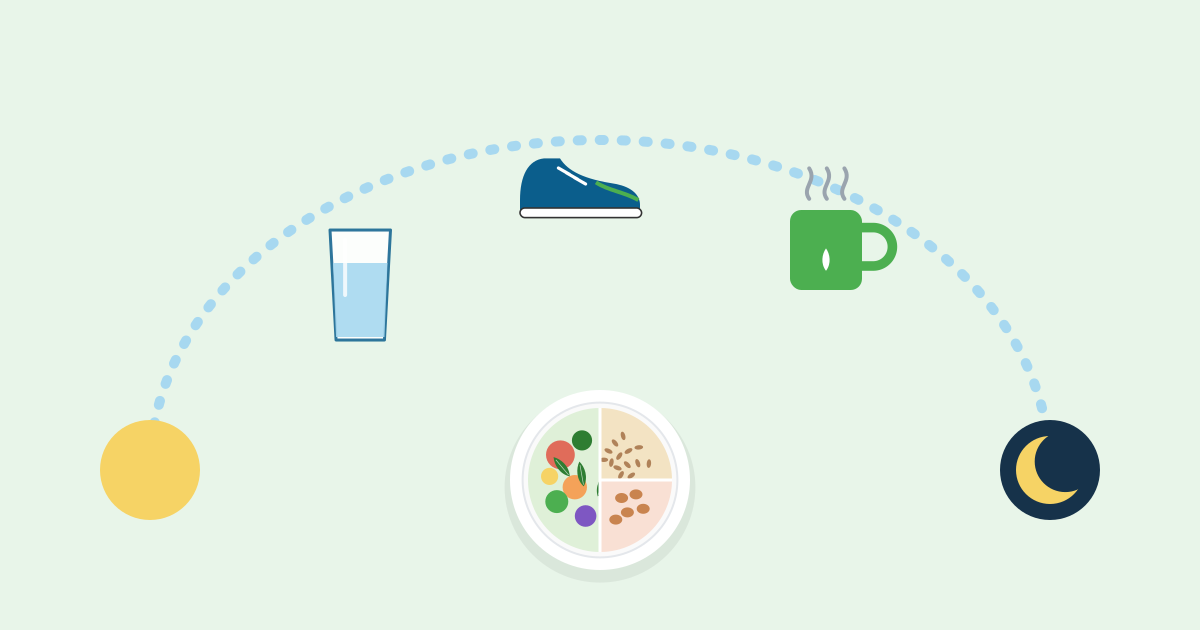
Take a few minutes to think about the main areas of everyday wellbeing:
Notice what’s already working — and one area you’d like to improve.
Pick changes that are specific and realistic. For example: “a 15-minute walk after lunch on weekdays” or “screens off 30 minutes before bed”. 10 simple habits has more ideas.
A simple daily structure might look like this:
| Time | Idea |
|---|---|
| Morning | Glass of water; a balanced breakfast; a few minutes outdoors |
| Midday | A movement break or walk; a balanced lunch |
| Afternoon | Stand up and stretch between tasks |
| Evening | Cook or plan tomorrow’s meals; connect with someone |
| Bedtime | Wind-down routine; consistent bedtime |
Add weekly anchors: two strength sessions, a meal-planning time, and something you enjoy. The Canadian 24-Hour Movement Guidelines suggest adults aim for 150 minutes of moderate to vigorous activity a week, strength activities twice a week, 7–9 hours of sleep, and less sitting — use these as long-term targets, not day-one requirements.
Use our weekly wellness checklist to tick off habits. At the end of each week, ask: What worked? What got in the way? What will I adjust? Habits take time to form, so be patient. How to build healthy habits.
Busy weeks, travel and illness happen. A good routine bends without breaking: have a “minimum version” for hard days, such as a 5-minute walk and a glass of water. You can return to your full routine when things settle.
Links were checked on 28 October 2026. External sites may change their content.

Written by the PreppingForHealth.ca editorial team. Reviewed against the sources listed above. Named author and professional reviewer details will be added only when verified. Author to confirm
Ten small, realistic habits — from drinking water to moving more and winding down at night — that can fit into a busy week.
Read article
What research says about how habits form, and practical ways to make a new healthy behaviour stick.
Read article
How to start moving more and keep going: Canadian activity guidelines, choosing activities you enjoy, and building up gradually.
Read article